

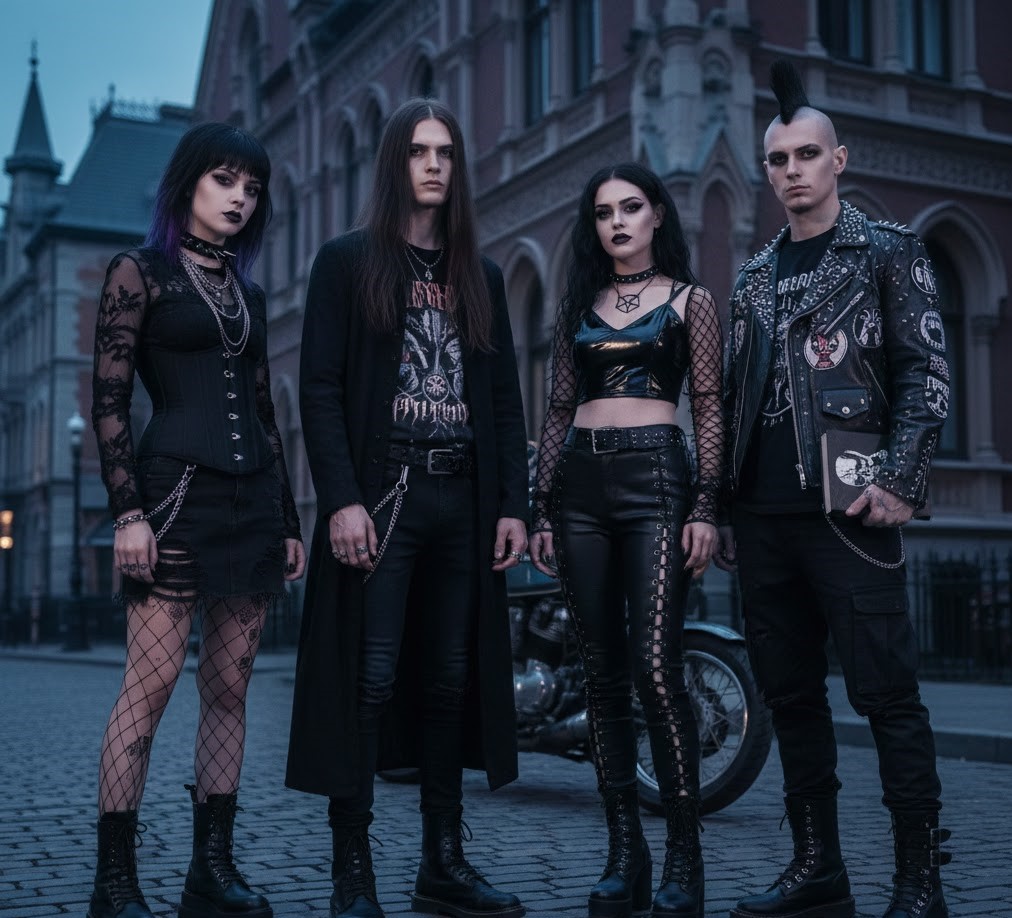
Shadows and Velvet: Understanding the Goth Subculture
(what is goth) To the uninitiated, “Goth” is often reduced to a simple aesthetic: black clothes, heavy eyeliner, and a penchant for graveyards. However, to those within the fold, Goth is a rich, multi-layered subculture that has survived for over four decades. It is a philosophy, a musical genre, and a community that finds profound beauty in the macabre, the melancholy, and the marginalized.
Click Here To BUY NOW >> Premium Gothic Pants
The Architectural and Historical Roots
The term “Goth” did not begin with fishnets and hairspray. Its origins are deeply historical. The Goths were East Germanic tribes who played a significant role in the fall of the Roman Empire. Later, during the Renaissance, the term “Gothic” was used derisively to describe a style of architecture characterized by pointed arches and flying buttresses—styles that critics considered “barbaric.“

In the 18th and 19th centuries, Gothic Literature emerged. Authors like Mary Shelley, Bram Stoker, and Edgar Allan Poe explored themes of death, romance, and the supernatural. This literary tradition laid the foundational “vibe” of the modern subculture: an obsession with the past, the haunting nature of existence, and the romanticization of the dark.
The Birth of the Subculture: Post-Punk and Batcave
The modern Goth subculture was born in the United Kingdom in the late 1970s and early 1980s. It branched off from the punk movement. While punk was loud, political, and aggressive, Goth was introspective, atmospheric, and theatrical.
Music is the beating heart of the movement. Bands like Bauhaus, Siouxsie and the Banshees, The Cure, and The Sisters of Mercy defined the sound. The release of the song “Bela Lugosi’s Dead” by Bauhaus in 1979 is widely considered the “Big Bang” of Goth music. These artists combined tribal drumming, heavy basslines, and ethereal guitar melodies with lyrics that touched on existentialism and sorrow.
The legendary London nightclub, The Batcave, became the epicenter of the scene in 1982. It was here that the visual identity of Goth began to solidify: teased hair, dark makeup, and an eclectic mix of leather and lace.

The Aesthetic: More Than Just Black
While black is the primary color of the Goth wardrobe, the aesthetic is incredibly diverse. Over the decades, several “sub-types” of Goth style have emerged:
-
Traditional (Trad) Goth: This pays homage to the 80s roots—big hair, fishnets, leather jackets, and heavy eyeliner.
-
Victorian Goth: Inspired by 19th-century mourning attire, featuring corsets, top hats, lace, and velvet.
-
Romantic Goth: Focuses on the softer side of darkness, utilizing flowing fabrics and themes of tragic poetry.
-
Cyber Goth: A neon-infused departure that blends industrial music with futuristic elements like gas masks and PVC.
-
Gothic Lolita: A style originating in Japan that mixes Victorian-era doll-like fashion with darker motifs.
Regardless of the specific style, the intent is often to challenge conventional standards of beauty and to embrace the “other.“
The Philosophy of Goth
At its core, Goth is an outsider subculture. It provides a sanctuary for those who feel they do not fit into mainstream society. Unlike many other subcultures, Goth does not have a specific political manifesto. Instead, it is built on a shared mindset:

1. Finding Beauty in the Dark
Mainstream culture often avoids the topic of death or sadness. Goth embraces it. This isn’t about being “depressed”; it’s about acknowledging that darkness is a natural part of the human experience. There is a specific kind of beauty in a crumbling ruin, a rainy day, or a mournful cello solo.
2. Individualism and Creativity
Goth encourages DIY (Do It Yourself) ethics. Because Goth clothing wasn’t always available in shops, early Goths had to make their own—sewing patches onto jackets, shredding tights, and repurposing Victorian antiques. This spirit of creativity remains a hallmark of the community.
3. Intellectual Curiosity
Many Goths are drawn to history, philosophy, and the arts. Whether it’s studying the works of Baudelaire or exploring the symbolism in alchemy, there is a deep appreciation for the intellectual “shadows” of human history.

Common Misconceptions
Because Goth is a visible and “dark” subculture, it has faced significant stigma.
-
“Goths are depressed or suicidal”: While Goth music deals with melancholy, for many, the subculture is a healthy outlet for those emotions. Expressing sadness through art and fashion can be cathartic.
-
“It’s a phase”: While many teenagers experiment with Goth, there is a massive community of “Elder Goths”—people in their 40s, 50s, and 60s who have remained dedicated to the music and lifestyle for decades.
-
“Goth is about religion”: While some Goths use religious imagery (like crosses) for their aesthetic or historical value, Goths can be of any faith or none at all. It is a secular subculture.
Goth in the Digital Age
With the rise of the internet, Goth has evolved. In the 90s and 2000s, forums and chatrooms allowed isolated Goths in small towns to connect with a global community. Today, platforms like TikTok and Instagram have introduced “Goth” to a new generation, though this has led to debates within the community about the importance of music versus just the “look.“
The core of the subculture, however, remains unchanged. It is a space for the dreamers, the poets, and the rebels who find the night more inviting than the day.
Conclusion: Why Goth Endures
Goth has survived longer than most subcultures because it touches on universal human themes. As long as there is music that explores the soul, as long as there is poetry about lost love, and as long as there are people who feel like misfits, Goth will exist.
It is a celebration of the unconventional. It teaches us that we don’t have to fear the shadows—we can wear them, dance in them, and find a home within them.