

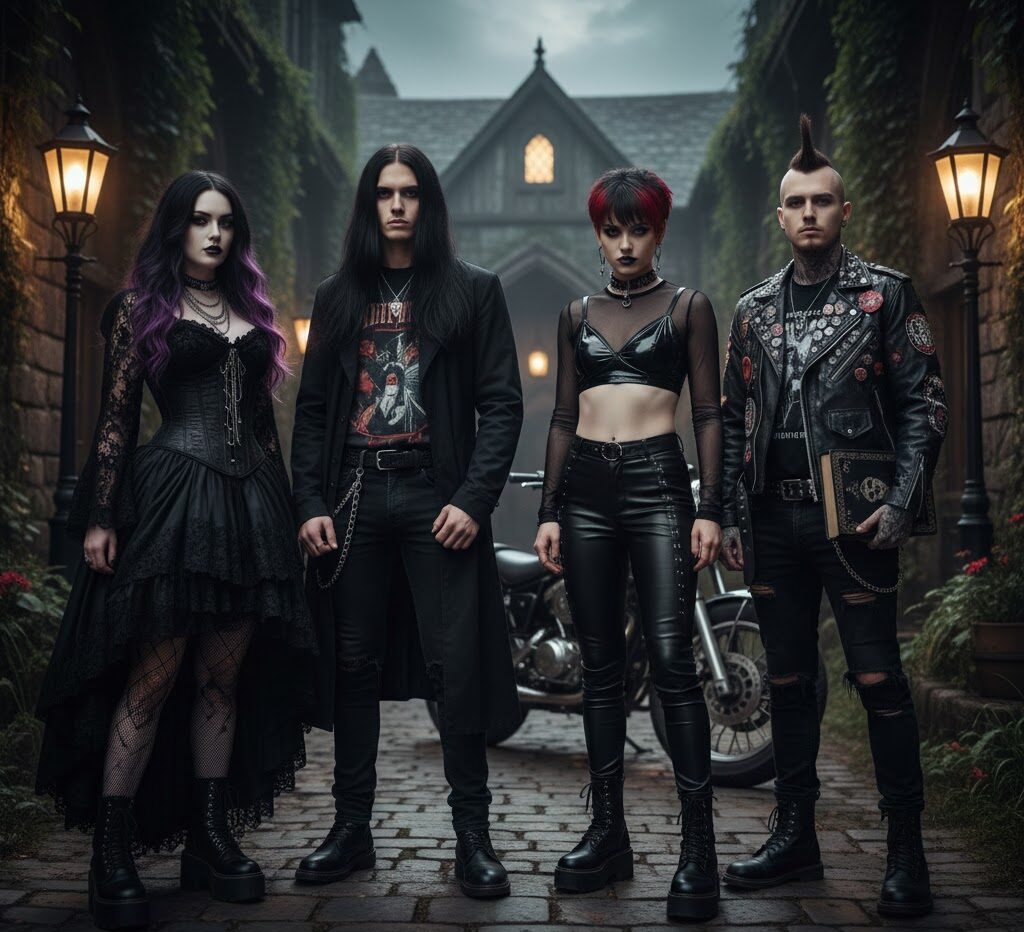
The Velvet Shadow: A Deep Dive into Goth Culture
(what is the goth culture) Goth culture is one of the most enduring and misunderstood subcultures in modern history. Often oversimplified as a mere fashion choice or a teenage phase, Goth is actually a complex tapestry of music, literature, philosophy, and aesthetics that has thrived for over forty years. It is a community built on the celebration of the “other,” finding profound beauty in the melancholy, the macabre, and the mysterious.
The Foundations: Historical and Literary Roots
While modern Goth emerged in the late 20th century, its soul is rooted in centuries of history. The term “Gothic” originally referred to the Goths, an East Germanic tribe. During the Renaissance, the term was repurposed to describe a style of architecture characterized by towering spires and pointed arches that was seen as “barbaric” compared to classical styles.
Click Here To Buy>> Gothic Pants
By the 18th and 19th centuries, the “Gothic” label shifted toward literature. Writers like Mary Shelley, Edgar Allan Poe, and Bram Stoker explored themes of death, romance, and the supernatural. This literary movement celebrated the sublime the feeling of being overwhelmed by something vast, dark, and beautiful. The modern Goth subculture inherited this romanticization of the dark, turning the haunting atmosphere of a Victorian novel into a lived experience.
The Birth of a Subculture: The Post-Punk Era
The contemporary Goth subculture was born in the United Kingdom in the late 1970s. It rose from the ashes of the punk movement. While punk was loud, fast, and politically aggressive, some artists began to turn inward, experimenting with slower tempos, atmospheric sounds, and introspective lyrics.

The music is the primary pillar of the culture. Bands like Bauhaus, Siouxsie and the Banshees, The Cure, and The Sisters of Mercy defined the “Gothic Rock” sound. The release of Bauhaus’s “Bela Lugosi’s Dead” in 1979 is widely cited as the anthem that solidified the movement. The music was characterized by driving basslines, ethereal guitar melodies, and haunting vocals.
The epicenter of this burgeoning scene was a London club called The Batcave, which opened in 1982. It provided a sanctuary for people to experiment with theatrical makeup and fashion, effectively creating the visual blueprint for what we now recognize as Goth.
The Philosophy: Beauty in the Darkness
At its core, Goth is a philosophical stance. It is a rejection of the “toxic positivity” of mainstream society, which often demands that people hide their sadness or fear of mortality. Goth culture, by contrast, embraces these elements.
1. The Celebration of Melancholy
To a Goth, sadness is not something to be cured, but something to be explored. There is a specific kind of comfort found in a rainy day, a crumbling ruin, or a tragic poem. This isn’t about being “miserable”; it is about acknowledging the full spectrum of human emotion.

2. Individualism and the Outsider
Goth has always been a refuge for those who feel marginalized by traditional social norms. It encourages radical individualism. Within the subculture, being “weird” or “different” is a badge of honor. This fosters a community that is generally more accepting of diverse identities and neurodivergence.
3. Intellectualism and Artistry
Goth culture is deeply tied to the arts. Many participants are drawn to history, philosophy, and classical art. There is a reverence for the past, leading many Goths to spend their time in museums, libraries, and historical sites, finding inspiration in the craftsmanship and stories of previous eras.
The Aesthetic: A Spectrum of Shadows
While black is the unifying color, Goth fashion is far from a monolith. It has evolved into several distinct branches:
-
Trad Goth: The original 80s look, featuring teased hair, fishnets, leather jackets, and heavy eyeliner.
-
Victorian Goth: A refined, historical look utilizing corsets, lace, top hats, and velvet, inspired by 19th-century mourning attire.
-
Romantic Goth: Focuses on the softer, more poetic side of the darkness, often incorporating flowing fabrics and floral motifs.
-
Cyber Goth: A more modern, industrial-influenced style that mixes black with neon colors, incorporating elements like gas masks and synthetic hair.
-
Gothic Lolita: A substyle originating in Japan that blends Victorian doll-like silhouettes with dark, gothic themes.
Regardless of the specific “type,” the goal of Goth fashion is often to transform the body into a work of art that challenges conventional standards of beauty.

Debunking Common Misconceptions
Because Goth is a visible and “dark” subculture, it has been plagued by myths and stereotypes.
-
“Goths are Depressed”: While the culture explores melancholy, being Goth is not a mental health diagnosis. For many, the subculture is actually a source of joy and creative fulfillment.
-
“It’s About Religion”: Some Goths use religious imagery (like inverted crosses or ankhs) for their historical or aesthetic value, but Goths come from all walks of life Atheists, Christians, Pagans, and beyond.
-
“It’s Just a Phase”: While many discover Goth in their youth, the community of “Elder Goths” is massive. These are individuals who have maintained their love for the music and philosophy for thirty or forty years, proving that Goth is a lifelong identity for many.
The Global Community and the Digital Age
The advent of the internet changed Goth culture forever. In the 1990s and early 2000s, message boards and chat rooms allowed Goths in isolated areas to connect. Today, platforms like Instagram and TikTok have brought Goth aesthetics to the mainstream.
However, this “mainstreaming” has created a tension between those who see Goth as a music-based subculture and those who see it primarily as a fashion trend. Despite these debates, the core of the community remains the same: a shared love for the “darkly beautiful” aspects of life.
Why Goth Endures
Goth has survived while many other subcultures have faded because it speaks to a universal human experience. As long as there is music that touches the soul, as long as there is mystery in the night, and as long as there are individuals who feel they don’t fit into a “cookie-cutter” world, Goth will exist.
It is a culture that teaches us that we do not have to be afraid of the shadows. Instead, we can inhabit them, dress them in lace, and dance to the rhythm of a heavy bassline. It is the art of finding light within the dark.