
Introduction: The Ultimate Sewing Challenge
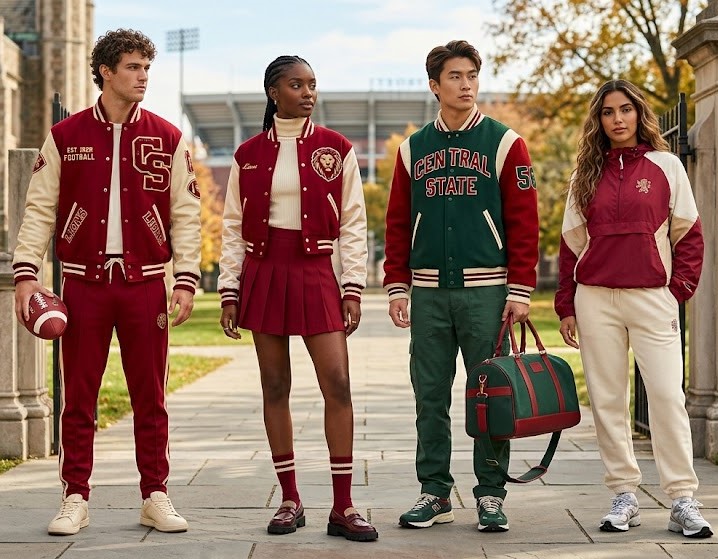
(how to sew a varsity jacket) There is something magical about a varsity jacket. The wool body. The leather sleeves. The snap buttons. The fuzzy chenille letter on the chest. It is an American icon.
Now imagine wearing one that you made yourself. With your own hands. In your own colors. With patches that mean something to you.
ORDER YOUR CUSTOM JACKET ACCORDING YOUR DESIGN
Sewing a varsity jacket is not a beginner project. I will be honest with you. It takes time, patience, and some intermediate sewing skills. But it is absolutely doable. And the result? A jacket that fits you perfectly and tells your story.
In this guide, I will walk you through every step from choosing fabrics to attaching that final snap button. Let’s get started.
What You Will Need: Materials and Tools
Before you cut a single piece of fabric, gather your supplies. Nothing is worse than stopping mid-project because you are missing something.
Materials List
| Component | Recommended Material | Notes |
|---|---|---|
| Jacket Body | Wool or wool blend (80-90% wool) | Medium to heavyweight, traditional |
| Sleeves | Genuine leather or faux leather | PU leather is easier for beginners |
| Ribbed Trim | Elasticized knit ribbing | For collar, cuffs, and waistband |
| Lining | Satin or quilted polyester | Adds comfort and warmth |
| Closure | Snap buttons or zipper | Traditional is 5 snaps |
| Thread | Heavy-duty polyester or nylon | Must handle thick fabrics |
| Patches | Chenille or felt | For the letter and decorations |
Tools List
-
Heavy-duty sewing machine (must handle thick fabrics)
-
Leather needle (size 90/14 or 100/16)
-
Walking foot or Teflon foot for leather
-
Fabric scissors and rotary cutter
-
Measuring tape and quilting ruler
-
Chalk or fabric markers
-
Iron and pressing board
-
Binder clips (for leather, pins leave holes)
-
Snap fastener installation tool
Pro tip: If you have never sewn with leather before, practice on scraps first. It behaves very differently from fabric.
Step 1: Choosing Your Fabric
The traditional varsity jacket has a specific look. But you can put your own spin on it.
For the body: Wool melton is the classic choice. It is thick, warm, and holds its shape beautifully. Look for 80-90% wool blends. Colors? Navy, black, red, maroon, and forest green are traditional. But who says you cannot do purple or teal?
For the sleeves: Genuine leather is authentic but expensive and harder to sew. Faux leather (PU) is more forgiving, cheaper, and still looks great. White sleeves with a navy body is the classic combo. But black-on-black works too.
For the ribbing: You need stretchy knit ribbing for the collar, cuffs, and waistband. Many varsity jackets have striped ribbing—one, two, or three stripes in contrasting colors. Measure the areas where these will go before cutting. The ribbing should be slightly shorter than the fabric edge because it needs to stretch for a snug fit.
For the lining: Satin is traditional—slippery, shiny, and comfortable against the skin. Quilted polyester adds more warmth. Choose something that contrasts or complements your outer fabric.
Do not forget to pre-wash your wool fabric. Wool can shrink. Wash it the way you will wash the finished jacket (dry cleaning is best). Pre-shrinking now prevents heartbreak later.
Step 2: Creating or Getting a Pattern
You have two options here: buy a pattern or draft your own.
Buying a pattern (easier): Several companies make varsity jacket patterns. The Folkwear Varsity Jacket pattern (Pattern #251) is highly recommended. It includes instructions for the traditional wool body with leather sleeves AND knitting instructions for the collar, cuffs, and waistband.
Drafting your own (advanced): Take accurate measurements of your chest, waist, hips, shoulder width, and sleeve length. Add 2-4 inches for ease of movement. Sketch the front, back, and sleeve pieces on paper. Add seam allowances—typically 1/2 inch to 1 inch depending on fabric thickness.
Test the fit: Before cutting into your expensive wool and leather, sew a test version using cheap fabric (muslin works well). This is called a “mock-up” or “toile.” It lets you check the fit without ruining your good materials.
Step 3: Cutting the Fabric
Once your pattern is ready and tested, it is time to cut.
Lay your wool fabric flat on a large surface. Make sure it is wrinkle-free. Pin your pattern pieces to the fabric, following the grain line. Use sharp fabric scissors or a rotary cutter for clean edges.
For the leather sleeves: Lay the leather flat (right side facing up if it has a grain direction). Pin the pattern pieces through the seam allowance only—pins will leave permanent holes in leather. Better yet, use pattern weights or binder clips. Cut with a rotary cutter or very sharp scissors. Do not use dull blades; they will tear the leather.
Pro tip: Label every piece after cutting. Use masking tape and a pen. Write “front left,” “back,” “sleeve right,” etc. This saves so much confusion later.
Step 4: Sewing the Body
Now the real work begins.
Shoulder seams: Place the front and back pieces together with right sides facing. Sew along the shoulder seams using a heavy-duty machine. Use a straight stitch with a length of 3-4 mm. Press the seams open with an iron (low heat for wool, no direct heat on leather).
Side seams: Match up the front and back at the sides. Sew from the armhole down to the hem. Again, press the seams open.
Try it on: Stop here. Pin the shoulder and side seams. Try on what you have so far. Check the fit around your chest and torso. Adjust if needed. It is much easier to fix now than later.
Step 5: Attaching the Leather Sleeves
This is the trickiest part. Go slow. Be patient.
Prepare your machine: Switch to a leather needle. Reduce your machine’s tension slightly. Increase stitch length to 4 mm (leather does not like short, dense stitches). Use a walking foot if you have one—it helps feed the leather evenly.
Pin or clip: Use binder clips instead of pins. Pins leave permanent holes. Clip the sleeve to the armhole, right sides together, matching the notches or seams.
Sew: Stitch slowly, guiding the leather without pulling or pushing. The leather sleeve should ease into the armhole—it is slightly bigger than the armhole on purpose, to give you room to move.
Check mobility: After sewing one sleeve, try the jacket on again. Raise your arm. Move around. The sleeve should feel comfortable, not tight or restricted.
Pro tip: Do not rip stitches out of leather. Every needle hole is permanent. Sew carefully the first time.
Step 6: The Collar, Cuffs, and Waistband
The ribbed trim is what gives a varsity jacket its distinct silhouette.
Cut the ribbing: Measure the neck opening, the sleeve ends, and the bottom of the jacket. Cut the ribbing about 20-25% shorter than these measurements. The ribbing needs to stretch to fit snugly.
Fold and pin: Fold the ribbing in half lengthwise (wrong sides together). Pin or clip it to the edge of the jacket, matching raw edges. The ribbing will need to stretch to reach the ends.
Sew: Use a zigzag stitch or a stretch stitch on your machine. Stretch the ribbing gently as you sew so it lies flat against the jacket fabric.
For the collar: The neckband is the same ribbing but usually wider—2 to 3 inches finished. Attach it the same way.
Alternative (leather trim): Some modern varsity jackets use leather for the collar, cuffs, and waistband instead of knit ribbing. This requires a different technique—gathering the fabric to fit the leather band. It looks amazing but is more advanced.
Step 7: Adding the Lining
A lining makes your jacket comfortable to wear and hides all your interior seams.
Cut the lining: Use the same pattern pieces you used for the outer fabric. Cut one set from your lining material.
Assemble the lining: Sew the shoulder and side seams of the lining the same way you did for the outer jacket. But do not attach the sleeves yet.
Insert the lining: With the outer jacket turned inside out, place the lining inside, right sides together. Match up the necklines, front edges, and hems. Pin or clip in place.
Sew the lining: Stitch along the front edges, around the neck, and across the bottom hem. Leave a gap of about 6-8 inches along the bottom for turning.
Turn right side out: Pull the entire jacket through the gap you left. The right side of both fabrics will now be facing out.
Close the gap: Hand-stitch the opening closed using a slip stitch or ladder stitch.
Attach the lining sleeves: This is the tricky part. Some sewists attach the lining sleeves by hand after the jacket is turned. Others assemble the lining and outer sleeves together before inserting. Follow your pattern’s instructions.
Step 8: Installing the Closure
Traditional varsity jackets use snap buttons. Five of them, evenly spaced down the front.
Mark placement: Close the jacket and mark where the snaps should go. Usually one at the chest, one at the waist, and three evenly spaced between.
Install snaps: Use a snap fastener tool or a hammer-and-anvil set. Follow the manufacturer’s instructions. For leather front panels, reinforce the inside with a small piece of interfacing before installing snaps.
Alternative (zipper): Some patterns use a zipper instead. Install the zipper before attaching the lining. A separating zipper works best for jackets.
Step 9: Adding Patches and Personal Touches
This is the fun part. This is what makes the jacket yours.
The varsity letter: Traditional letterman jackets have a chenille letter patch on the left chest. You can buy these pre-made or have them custom embroidered. Sew the patch on by hand or machine. Use a zigzag stitch close to the edge of the patch.
Name embroidery: Many people put their name across the back of the jacket. This requires either an embroidery machine or a custom embroidery service.
Additional patches: Add sport patches, year patches, achievement badges, or fun decorative patches. Sew them on securely. Iron-on adhesives work temporarily, but sewing lasts forever.
DIY monogram: For a personal touch, embroider your initials on felt and attach it to the chest or sleeve. Use an embroidery hoop, floss, and a sharp needle.
Pro tip: Less is more. A jacket covered in too many patches looks cluttered. Choose a few meaningful ones and place them thoughtfully.
Step 10: Final Touches and Quality Check
You are almost done. Do not rush this last step.
Inspect everything: Turn the jacket inside out. Check every seam. Look for:
-
Loose threads (trim them)
-
Missed stitches (reinforce them)
-
Bulky seams (press them flat)
-
Loose patches (add more stitches)
Press carefully: Use an iron on low heat for wool areas. Do not iron directly on leather—it can melt or discolor. Use a pressing cloth between the iron and the fabric.
Try it on one last time: Move around. Raise your arms. Sit down. The jacket should feel comfortable and look great.
Care instructions: Write down how to care for your jacket. Dry clean only (wool and leather do not mix well with washing machines). Store on a wide hanger to maintain the shoulder shape.
How Long Does It Take?
Sewing a varsity jacket from scratch takes time. Here is a realistic timeline:
| Step | Estimated Time |
|---|---|
| Pattern preparation and cutting | 2-4 hours |
| Sewing the body | 1-2 hours |
| Attaching sleeves | 1-2 hours |
| Adding collar, cuffs, waistband | 2-3 hours |
| Lining insertion | 2-3 hours |
| Installing snaps/zipper | 1 hour |
| Patches and finishing | 1-2 hours |
| Total | 10-16 hours |
Spread this across several days. Do not rush. Your patience will show in the final result.
Frequently Asked Questions
Q: Can I sew a varsity jacket without a heavy-duty sewing machine?
A: Possibly, but it is difficult. Standard home machines struggle with thick wool and leather. If your machine cannot handle multiple layers, consider using a leather-look knit instead of genuine leather, and a medium-weight wool blend.
Q: Where can I find chenille letter patches?
A: Online retailers, craft stores, or custom embroidery shops. You can also buy adhesive-backed letters and sew them on for extra security.
Q: Can I use fabric glue instead of sewing for patches?
A: Glue works for temporary placement, but sewing is much more durable. If you must use glue, choose a fabric-specific adhesive like Aleene’s Fabric Fusion.
Q: What is the best way to sew leather sleeves?
A: Use a leather needle, a walking foot, and binder clips instead of pins. Sew slowly. Do not backstitch—leave long thread tails and tie them off by hand.
Q: How do I prevent the wool body from shrinking after sewing?
A: Pre-wash your wool fabric before cutting. After that, dry clean the finished jacket only. Never machine wash a wool-and-leather jacket.
Q: Can I make a varsity jacket without leather sleeves?
A: Absolutely. Use the same wool as the body, or use denim, corduroy, or even satin. The Folkwear pattern includes options for non-leather sleeves.
Q: I made a mistake on the leather. Can I rip out the stitches?
A: You can, but every needle hole will remain visible. For small mistakes, leave the stitches and sew a second line next to them. For large mistakes, consider adding a decorative patch to cover the damage.
Final Thoughts: Wear Your Achievement
Sewing a varsity jacket is a serious project. You will learn new skills. You will probably make a few mistakes. You might need to rip out some seams and try again.
But when you finish? When you put on that jacket and it fits perfectly? When someone asks where you bought it and you say “I made it myself”?
That feeling is worth every frustrating moment.
The varsity jacket started as a symbol of athletic achievement. Now, when you sew your own, it becomes a symbol of creative achievement. And that is just as meaningful.
Not ready to sew your own? Visit LettermanJacketCustom.com to design a custom varsity jacket without the sewing. Choose your colors, add your patches, and get a professional-quality jacket made just for you.