What Is a DTF Printer? Everything You Need to Know About Direct-to-Film Printing
In the world of custom apparel and garment decoration, DTF printing has become one of the most popular printing methods available today. Whether you’re creating custom t-shirts, hoodies, letterman jackets, or promotional clothing, a DTF printer offers a versatile and cost-effective solution for high-quality designs.
At LettermanJacketCustom, we understand the importance of premium customization. That’s why many apparel businesses are turning to Direct-to-Film technology to create vibrant and long-lasting prints on various fabrics.
In this guide, we’ll explain what a DTF printer is, how it works, its advantages, and why it has become a game-changer in the custom clothing industry.
What Is a DTF Printer?
A DTF printer (Direct-to-Film printer) is a specialized printing machine that transfers designs onto a special film before applying them to fabric using heat and adhesive powder.
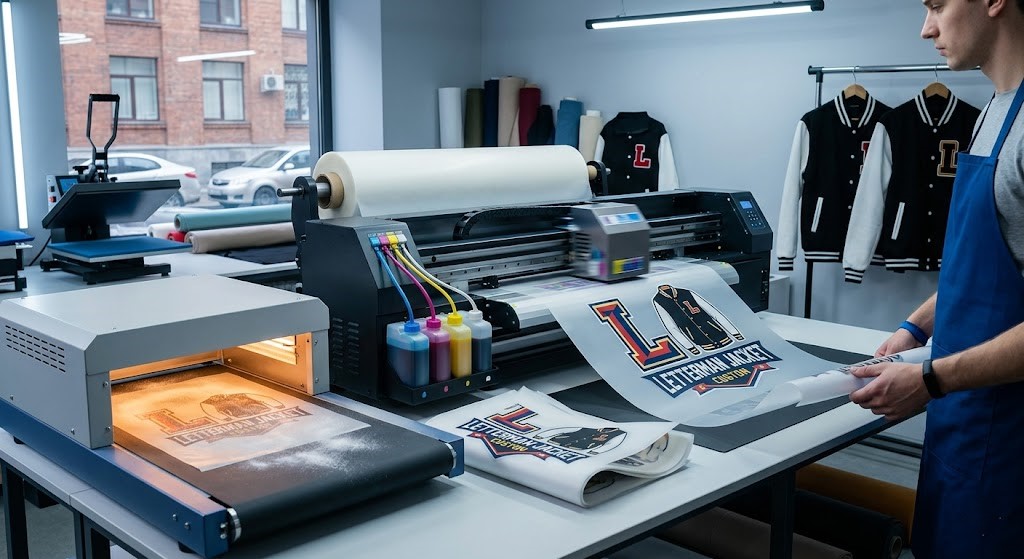
Unlike traditional printing methods that print directly onto garments, DTF printing involves printing the design onto a PET film, applying adhesive powder, curing the powder, and then heat-pressing the design onto the desired material.
This process creates durable, vibrant, and flexible prints that work on a wide range of fabrics.
How Does a DTF Printer Work?
The DTF printing process consists of several simple steps:
1. Design Creation
The artwork is created using graphic design software such as Adobe Photoshop, Illustrator, or CorelDRAW.
2. Printing on Film
The DTF printer prints the design onto a transparent PET transfer film using specialized DTF inks.
3. Adhesive Powder Application
A hot-melt adhesive powder is applied to the printed design while the ink is still wet.
4. Powder Curing
The adhesive powder is heated and cured to prepare the transfer for application.
5. Heat Press Transfer
The printed film is placed on the garment and transferred using a heat press machine.
6. Peel and Finish
After cooling, the film is peeled away, leaving a high-quality print permanently bonded to the fabric.
Why Is DTF Printing So Popular?
DTF printing has gained massive popularity because it solves many limitations associated with traditional printing methods.
Works on Multiple Fabrics
One of the biggest advantages of DTF printing is its compatibility with various materials, including:
- Cotton
- Polyester
- Nylon
- Canvas
- Denim
- Blended fabrics
- Wool
This flexibility makes DTF ideal for custom apparel businesses.
High-Quality Color Output
DTF printers produce vibrant colors and sharp details. Even complex designs with gradients and small text can be printed accurately.
No Fabric Color Restrictions
Unlike some printing methods, DTF works effectively on both light and dark-colored garments without compromising image quality.
Excellent Durability
DTF transfers are highly resistant to:
- Cracking
- Peeling
- Fading
- Washing damage
When properly applied, prints can remain vibrant after multiple wash cycles.
DTF Printing vs Screen Printing
Many apparel businesses compare DTF printing with traditional screen printing.
DTF Printing Advantages
- No screen setup required
- Faster for small orders
- Supports full-color designs
- Suitable for on-demand production
- Works on multiple fabric types
Screen Printing Advantages
- Cost-effective for large bulk orders
- Extremely durable
- Ideal for simple designs
For custom letterman jackets and personalized apparel, DTF printing often provides greater flexibility.
DTF Printing vs DTG Printing
DTF and DTG (Direct-to-Garment) are often confused, but they are different technologies.
DTF Printing
- Prints onto transfer film
- Works on most fabrics
- Minimal garment pretreatment
- Suitable for dark and light garments
DTG Printing
- Prints directly onto fabric
- Works best on cotton
- Requires pretreatment
- Limited compatibility with some materials
Because of its versatility, many apparel businesses now prefer DTF printing for custom products.
Benefits of Using DTF Printing for Custom Apparel
Cost-Effective Production
DTF printing allows businesses to print single items or small batches without expensive setup costs.
Fast Turnaround Time
Custom orders can be completed quickly, making DTF ideal for eCommerce stores and print-on-demand businesses.
Detailed Designs
Complex artwork, logos, and graphics can be reproduced with exceptional accuracy.
Soft Feel
Modern DTF transfers provide a soft and flexible finish that feels comfortable when worn.
Strong Stretchability
DTF prints stretch with the fabric, reducing the risk of cracking or damage.
Applications of DTF Printing
DTF printing is used across various industries and product categories.
Custom T-Shirts
Many online stores use DTF printers to create personalized t-shirts with logos, artwork, and text.
Hoodies and Sweatshirts
The technology works perfectly on thicker garments, including hoodies and sweatshirts.
Letterman Jackets
At LettermanJacketCustom, DTF printing can be used for custom graphics, names, logos, and decorative elements on varsity jackets.
Sportswear
Sports teams often use DTF transfers for uniforms and training apparel.
Corporate Apparel
Businesses use DTF printing to create branded clothing for employees and promotional events.
Fashion Brands
Many startup fashion brands rely on DTF technology to launch custom collections without large production investments.
Essential Components of a DTF Printing System
A complete DTF setup typically includes:
DTF Printer
The main machine responsible for printing designs onto transfer film.
PET Film
A specialized transparent film that holds the printed design.
DTF Ink
Pigment-based inks designed specifically for DTF applications.
Adhesive Powder
A hot-melt adhesive that bonds the design to the fabric.
Heat Press Machine
Used to transfer the design from the film onto the garment.
Each component plays a critical role in achieving professional-quality results.
Is DTF Printing Good for Small Businesses?
Absolutely.
DTF printing has become one of the most attractive solutions for startups and small apparel businesses because it offers:
- Low startup costs
- Minimal inventory requirements
- On-demand production
- High customization potential
- Fast order fulfillment
This makes DTF technology ideal for entrepreneurs entering the custom clothing market.
Future of DTF Printing
The demand for personalized apparel continues to grow worldwide. As a result, DTF printing technology is rapidly evolving with:
- Faster printers
- Improved ink quality
- Better transfer durability
- Enhanced color accuracy
- Automated production systems
Many industry experts believe DTF printing will continue to be one of the fastest-growing garment decoration methods in the coming years.
Conclusion
A DTF printer is a powerful tool that allows businesses to create high-quality custom apparel quickly and efficiently. By printing designs onto transfer film and applying them with heat, DTF technology delivers vibrant colors, excellent durability, and compatibility with multiple fabric types.
For businesses involved in custom clothing, including varsity jackets, hoodies, t-shirts, and promotional apparel, DTF printing provides unmatched flexibility and cost-effectiveness.
At LettermanJacketCustom, we appreciate the value of advanced customization technologies that help create unique, stylish, and long-lasting apparel. As custom fashion continues to grow, DTF printing remains one of the best solutions for producing professional-quality personalized garments.