
Why Do Male Soccer Players Wear Sports Bras?
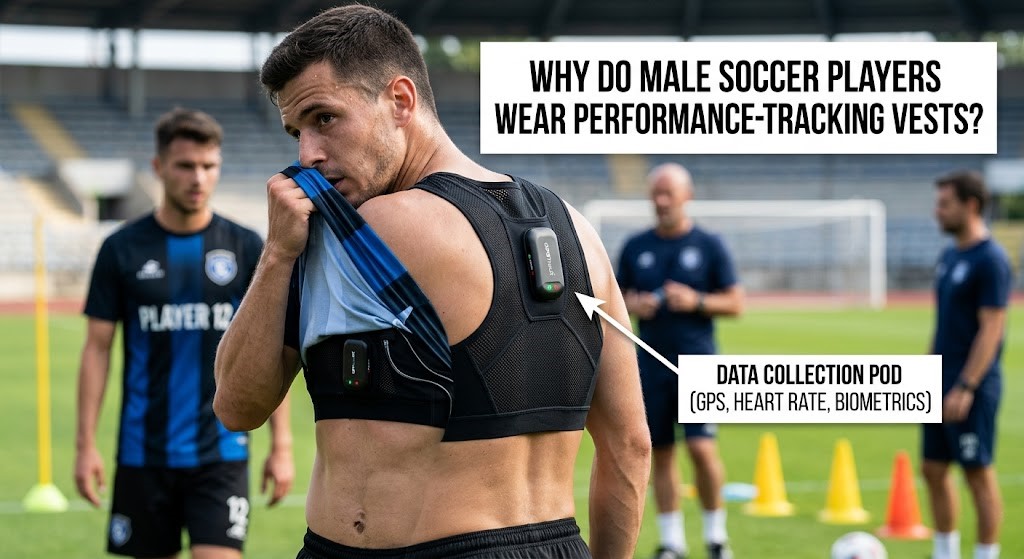
If you’ve watched professional soccer recently, you may have noticed male players wearing what looks like a sports bra during training sessions and sometimes underneath their jerseys. While they resemble sports bras, they are actually GPS performance tracking vests designed to help coaches and sports scientists monitor player performance.
These wearable devices have become a standard part of modern soccer training and are used by clubs and national teams around the world.
Click To Shop Soccer Bomber Jackets Free Shipping World Wide
What Are the “Sports Bras” Soccer Players Wear?
The garment is typically a tight-fitting compression vest worn across the upper body. A small pocket on the back holds a GPS tracking device and other sensors.
The vest is designed to:
- Keep the tracking unit secure
- Prevent movement during intense activity
- Collect accurate performance data
- Remain comfortable throughout training and matches
Although it resembles a sports bra, its purpose is completely different.
How Do GPS Tracking Vests Work?
The device inside the vest records a wide range of performance metrics.
These include:
Distance Covered
Coaches can see how far a player runs during training or a match.
Running Speed
The system tracks:
- Top speed
- Average speed
- Sprint frequency
Acceleration and Deceleration
Quick bursts of speed and sudden stops place significant stress on the body. Tracking these movements helps manage player workload.
Heart Rate Monitoring
Some systems integrate heart-rate sensors to measure physical exertion.
Movement Analysis
Advanced trackers analyze:
- Positioning
- Work rate
- Intensity levels
- Recovery patterns
This information helps teams make data-driven decisions.
Why Soccer Teams Use GPS Vests
Improve Performance
Coaches use collected data to optimize training programs and improve player performance.
For example, if a player isn’t reaching expected sprint speeds, coaches can adjust training accordingly.
Prevent Injuries
One of the biggest benefits of wearable tracking technology is injury prevention.
Monitoring workload helps teams identify when players may be at risk of:
- Muscle strains
- Overtraining
- Fatigue-related injuries
This allows medical staff to adjust training before injuries occur.
Track Recovery
After injuries, GPS data helps determine whether a player is ready to return to full competition.
Performance metrics can be compared to pre-injury levels to ensure proper recovery.
Measure Fitness Levels
Teams can assess whether players are maintaining the fitness standards required for professional competition.
Do Players Wear Them During Matches?
In many professional leagues, players wear tracking devices during both training and matches.
The information collected helps coaches evaluate:
- Work rate
- Tactical positioning
- Physical output
- Match intensity
The devices are lightweight and designed not to interfere with performance.
Are These Vests Comfortable?
Yes. Modern GPS vests are made from:
- Lightweight fabrics
- Breathable materials
- Stretchable compression fabrics
Players quickly adapt to wearing them, and many barely notice them during activity.
Other Sports That Use Similar Technology
Soccer isn’t the only sport using wearable tracking systems.
They are also common in:
- American football
- Rugby
- Basketball
- Hockey
- Cricket
- Australian rules football
Professional teams increasingly rely on sports science to gain a competitive advantage.
Benefits for Professional Soccer
Modern soccer is faster and more demanding than ever. Tracking technology provides valuable insights that were impossible to obtain in the past.
Benefits include:
- Better training plans
- Reduced injury risk
- Improved player conditioning
- Enhanced match analysis
- More effective recovery programs
As a result, GPS vests have become an essential tool in elite soccer.
Final Thoughts
Male soccer players wear what appear to be sports bras because they contain GPS tracking and performance-monitoring devices. These vests help coaches, trainers, and sports scientists collect important data about speed, distance, workload, and fitness levels.
Rather than being a fashion choice, these wearable technologies play a crucial role in modern soccer by improving performance, reducing injury risks, and helping players stay at their physical best throughout the season.