What Is Direct to Garment Printing (DTG)? Complete Guide
Direct to Garment printing (DTG) is a modern digital printing method used to print high-quality designs directly onto fabric using specialized inkjet technology. It is widely used in the custom apparel industry for printing T-shirts, hoodies, and other garments with detailed and colorful designs.
Unlike traditional printing methods like screen printing, DTG printing applies ink directly into the fibers of the fabric, producing a soft feel and highly detailed print.
How Does Direct to Garment Printing Work?
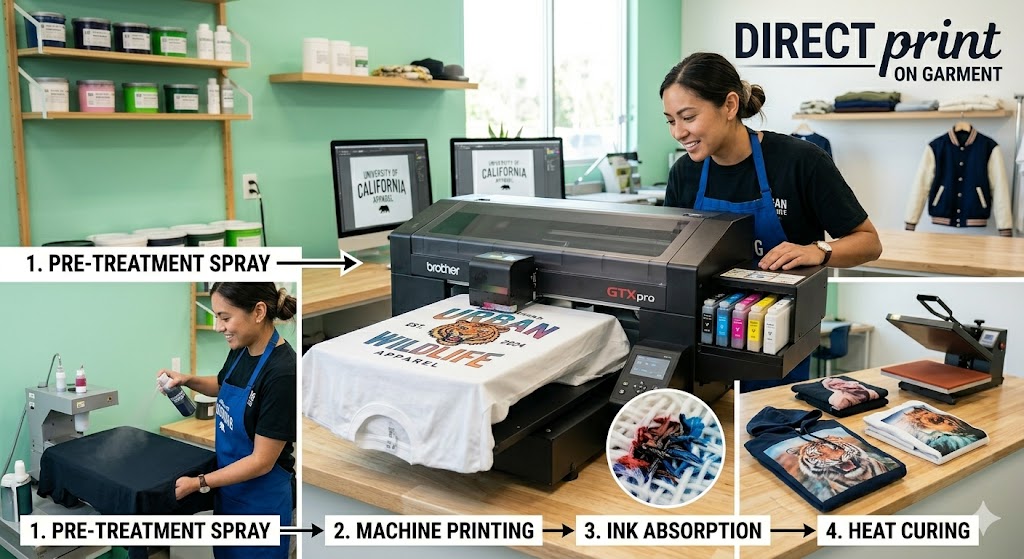
DTG printing works similarly to a regular inkjet printer, but instead of paper, it prints directly onto clothing.
The process includes:
1. Design Preparation
The artwork is created using software like Photoshop or Illustrator. High-resolution designs produce the best results.
2. Pre-Treatment of Fabric
Dark garments require a special pre-treatment liquid to help the ink stick and appear vibrant.
3. Loading the Garment
The shirt is placed on a flat platen inside the DTG printer.
4. Printing Process
The printer sprays water-based ink directly onto the fabric in fine detail.
5. Curing the Ink
Heat is applied using a heat press or conveyor dryer to permanently bond the ink to the fabric.
Key Features of DTG Printing
DTG printing is popular because of its advanced features:
- Full-color printing with gradients
- High-resolution image quality
- No setup screens required
- Perfect for small orders
- Soft feel on fabric
Advantages of Direct to Garment Printing
1. High Detail Printing
DTG can print complex designs, photographs, and gradients with excellent clarity.
2. No Minimum Order Quantity
You can print a single shirt or bulk orders easily.
3. Eco-Friendly Printing
Uses water-based inks, making it more environmentally friendly than some traditional methods.
4. Quick Setup Time
No need for screens or plates, which saves time and cost.
5. Soft Finish
The ink blends into the fabric, creating a smooth, non-heavy feel.
Disadvantages of DTG Printing
Although DTG is advanced, it has some limitations:
- Works best on cotton fabrics
- Slower for large bulk orders
- Requires pre-treatment for dark garments
- Equipment cost is high
DTG Printing vs Screen Printing
DTG Printing
- Best for small orders
- Full-color designs
- No setup cost
- Soft print feel
Screen Printing
- Best for bulk orders
- Limited colors per design
- Durable for large production
- Requires setup for each design
Best Fabrics for DTG Printing
DTG printing works best on:
- 100% cotton
- Cotton blends
- Light-colored fabrics
- Pre-treated dark garments
Synthetic fabrics like polyester may not absorb ink well.
Uses of Direct to Garment Printing
DTG printing is widely used for:
- Custom T-shirts
- Fashion clothing brands
- Personalized gifts
- Promotional apparel
- Small business merchandise
- Print-on-demand stores
Why DTG Printing Is Popular in Fashion
DTG printing has become a favorite in modern fashion because it allows designers and businesses to:
- Print on demand
- Reduce inventory costs
- Create unique designs easily
- Test new ideas quickly
This makes it ideal for startups and eCommerce clothing brands.
Final Thoughts
Direct to Garment printing (DTG) is one of the most advanced and flexible printing methods in the apparel industry. It offers high-quality, detailed prints with minimal setup, making it perfect for custom clothing businesses.
Whether you’re running a fashion brand or a print-on-demand store, DTG printing provides a cost-effective and creative way to produce professional-quality garments with full-color designs.